Fort Pitt

Fort Pitt
Center of the ohio country universe

Sunday, February 10, 2013

Eared cap Pattern and too many Yeungling's at Standing Stone

 Basic Pattern pieces


 inside front of the hood


Front of hood attached to side panel and front gusset

Layout of the back of the cap....3 gussets sewn in

  
   So here is the Basic "Galban" pattern for the Eared cap. Pretty simple construction, I simply did a running stitch onall the seams and used blanket weight white wool. Next is to finish My canadian cap and new mittens...Like I need more stuff stashed around the house.
      To add something historic to this Here is a quote from "Fithian's Journal" about coming into Standing Stone (present day Huntingdon,Pa)  Funny part is...This is still sounds alot like Central Pa today...
 
Monday Aug 21 1775

As I drew near I could not help thinking myself on the borders of some large town. There was a drum beating;  several antic-loud singers; every now and then a most vociferous laugh,and candles thinly scattered, shining here and there from the houses. I expected to find one of our American Bedlams. These small towns especially when they are growing fast, and a new thing go before every other plae in most sort of vice; but especially in drinking, and a few of its nearest allied attenadnts. 

I had cautiously put on my riding coat, to disguise the clerical cloth, for I was not certain that I should escape some religious or blackguard embarrassment, for too much liquor makes many “over wicked.” But it makes some “over good,” and sets them in a tune to ask more questions in divinity, especially explanations of parts of scripture that inexperienced I or indeed and docter in divinity in America could have patience, if he had the ability, to resolve…Before I came within a mile of town, I put on my surtout and cocked up my hat in the best manner. “you seem to be a stranger,” said a tall youngster to me as I put my first foot upon the porch. “Is the hostler here?” I Asked “are you from below, stranger”  “Bring in the saddle bag and let the horse cool before you give him a gallon of oats.” “are you a stranger sir?” “Yes sir.”  “A stranger,” I could hear one and another whispering about me on the porch; some thought I was one of the delegates appointed to the treaty with the Indians which is soon to be held at Fort Pitt; some thought I was a land Jobber; some that I was a broken, absconding merchant, some thought I was a tory flying from mob stick vengeance. I supped, however and soon retired.”

Friday, February 8, 2013

All I got for christmass was a lump of coal and a southern shot bag...

 Coal Mine from diderot...find the same thing near Fort Pitt


Dubatz Image...Strap/thong rig for horn..Is this whats going on in the commision bag?

 French Commision image...Plain and simple SE native kit


 My take on the Commision bag


Bag with Horn attached...It works despite the fact I dont want it to....


Dam you guys like eared caps! Who would have guessed that one? So as a result I’m putting up a pattern for folks all I ask is you not make it out of an army blanket for events, use red beads on it or put a roger’s rangers pin on it. I personally find that if I have an original idea to do with a reproduction it’s more than likely wrong. White heart beads are not your friend.  (I’ll post the pattern Saturday night)

                So to keep my posts as random as possible I’m now going to switch gears yet again. I started a write up about fur caps but put that on hold until I finish My Canadian cap, Like I need yet another piece of headgear. Turbans, knit caps, cotton caps, eared caps, tuques…My family think I’m nuts.  So I’ve decided to make another shot pouch!!! 

                I decided to make a copy of the pouch from the image found on a French Commision for a SE Native. This is one of a handful of images of Cherokees from the 18th cent and when looking at a good copy of the image some really nice details come to light.  I’d put off making the bag because well….I have to make other stuff.   I’ve been making a lot of stuff lately for a number of Cherokee folks and the lack of extant artifacts is always a problem.  I’ve already done a write up on a possible version of the “otter shot pouch” mentioned  in Adair and other sources so I’ve made a number of those  but the “commission” pouch was something well I guess I needed to make to show ppl what it “could” be. (make sense?)

To make the bag I took the image and blew it up to roughly life size to come up with a rough estimate for dimensions.  I then cut out a simple D shaped pouch sewed it up with Linen thread and knocked out a plain red oblique woven strap. I went with the oblique weave as it pops up in a few quasi dateable SE pieces.  For the strap another easy fix could be red wool tape but since I’m a weaver and all the red tape in my house goes on blanket coats this was an easy fix for me.

                The bag is roughly 8 inches wide by around 7 deep. I attached the strap to the bag with thongs punched thru each side. Now comes the speculation part I’m not 100% on. I used the thongs that attached the strap to attach the horn to the bag…and it works nicely. I didn’t want it to…but it does.  Wallace Gusslar has surmised over the years that this was an example of an attached bag/horn set and is the basis for the later bag/horn combo’s.

                Personally…I don’t know.  It’s a big jump from this image to the commonalty of this process you see in the 19th cent. Could this be a SE thing?  If you examine the DUbatz images you can see an odd ball rig being worn for a powder horn. Is this bag rig a variation on this style?  I have a horn strap like the one pictured in Dubatz and I’ve found a slit pouches rides awesome in this set up….but are slit pouches common in the SE?  ARe the mentions of “otter shot pouches” all shoulder rigs like vonreck  or  are they skinned out otters that can be used like a slit pouch…….SOOOOO MANY QUESTIONS!!!!

                Ok my point from this….This is my take on the pouch in the image. To me this is an educated guess at what might be going on in the image. No more no less.  I’ve seen a lot of fads tossed out there about SE stuff over the years ( twined bags are common in the SE…the guy who spread this one also made and sold twined bags, He also used Ben hunt books as the basis for all his twining,  Quilled SE turkey foot bags…despite geographic range of porcupines and the origin of the Moc the design was taken from)   Pretty simple design, pretty simple materials….I’m also gonna be extra crazy and NOT decorate it (is your mind blown?)  No paint, no cones, no beads…nothing.

                So with pretty basic materials you can knock out a SE shot pouch for little cost. Honestly for around $140 you could buy a hide and some wool tape  (Ike waters has a nice how to on making mocs similar to the Aberdeen moc) and have a nice pair of SE mocs, garters and bag (wool tape is nice gartering…looks like the guy in the image may be wearing some huh) Take the extra $  you didn’t spend on weirdness and buy a book.

                To keep the randomness going Here is some kewl info on Coal mines around Fort Ptt in the 18th cent.  Yes they used coal to heat stuff around the fort. If you’re from western Pa this shouldn’t surprise you since your house is probably built over an abandon coal mine.  A neat detail to my geek eye the diagram in Michael’s  Journal (not posted here but you can find the whole journal in google books ) is dead on for the Diderot plate diagram.

Robert Kirk

“Our business being finished we decamped, and began our march for Fort Pit, where we arrived in the middle of November 1764, and remained there all winter, and the better part of next summer. During our stay here, we were employed in bringing coals into the garrison, over the ice, in bags made of cowhide. The pit from which they are extracted is on the other side the river Maninghally, where it is supposed there is a very large mine there."


David McClure  Aug 21 1772…The village is about ¼ mile distant & consists of about 40 dwelling houses made of hewn logs & stands on the bank of the Moningehala; opposite on the south side** of the river is a hill of several miles in length, running parallel & extending to the bank, which appears to be a body of stone coal. It took fire accidentally a year past, & has formed a small by the caving of the earth. The coal is used by the inhabitants.

** Note from BT : It’s spelled South Side but you say it ”Sahside”   say it right Ya Jagoff!!!


“a Journal of the whiskey Insurrection”

William Michael 1794

Nov 17th  “I then Proceeded until I came to a stone cole mine through a strange woodland, the phenomena of which I had several times heard of. I went into the mouth thereof and called into it, if they would admit me; which eched and rolled for a minute nearly seemingly as an huge hollow vessel and was answered from within; which I could not comprehend, but thought they forbid me entering. I waited a moment, much disappointed; at length there came one of them out of the cave, and I then asked him to take me with him, which he seemed willingly to comply. He then Hallooed to some within to bring him a candle to light a stranger in, in French, and soon came one with the candle and black as the devil, enough to frighten one. He then ordered me to follow him in broken English, through a long entry, seemingly strongly smelling of sulphur, and yellow fat liquid running along the walls and under foot which they have laid with planks to make it more easy to wheel the cole out. They Then led me along gangways that intersected or run across the first. I was soon lost within it and suppose I could have with difficulty found the way out again. To give a more plain description of the cave will be by illustrating it as below. They were all French men that worked in it; They appeared as so many beings from the bottomless pit; they looked consumpted and emaciated”


                So that’s my random weirdness for the week.  Did the Cherokees scouting for the English fill their D shaped pouches with coal?  Not a clue….But I do know it’s snowing out right now so Rather then drive to Niagara I’ll be spending the morning hunting. Who knows I may even take out the new Shot pouch…or the blue plush one…or the otter one….or the one I rigged up based on Doddridge and Alders descriptions or….I’ll just stick stuff in my pockets.  I need help.  Before I forget  Mike Galban has started a really sweet blog  called "Edge of the woods" http://edgeotw.blogspot.com/   He's been posting some really great stuff. For example I learned he's a middle aged man...didnt see that one coming. His fire arrow craze is no older then 16 at the most....

Friday, January 25, 2013

Adventure time, beaver trapping and a Balanced Budget


 Cap in CMC 

                                                        Cap In NB  


                                  Back view of my hood

                                   Front view...Yes it looks a little goofy but it works
        So happy new year!!  This is the part is I gripe about being a slacker but you know the drill so lets move on. I’ve been really busy over the past few months hunting, reading and trying to learn skills and ever tweeking my gear.  First off the winter gear I’ve been amassing over the past 3 years has spent more than a few days in the woods and I’m glad to report that the guys who wore it knew what they were talking about (who would have guessed it). chausons, blanket coats, underjackets and the like WORK!!!!  
        I have however found I am lacking a pair of good ice creepers . A fact I found out while chasing a squirrel  at dusk during  a full moon. Let’s just say when he stopped and posed in the moonlight for the perfect shot…my feet kept going forward.  My back found a great piece of limestone to break my fall.  As I lay there writhing in pain and cursing the moon the phrase “look into ice creepers” passed through my skull.  So like many Kobuck hunters have done before me  I stood up shot a stump in anger and limped my way back home (the stump got away too)

                One item I am always messing with is new head ware.  Fur Turbans, Scarves, hats, knit caps I’ve got them all.  It’s one Item I revisit every few posts and the reason is simple. There were a lot of options in the period.  I’m still surprised at how many Native reenactors I know that do nothing in the winter or fall.  To me it seems many folks are more focused on stuff to tie to their scalplock (turkey roach bushes as far as the eye can see!) then they are at well…thinking.
              We all know that you lose heat thru your head (your mom probably spent years telling you this) You spend time in the woods in the winter and your going to get cold. You have a shaved head…your head is going to get…come one…You got it it’s going to get cold. So I’m going to spend some more time on yet another piece of headgear. The Eared Cap.

                Many folks are familiar with the wool “peaked” or “Micmac” hoods worn by natives during the 18th-19th cent. I’ve talked a little about these in the past and this will cover them a little as well. One variation of these caps is the “eared cap”. This is a cap made from 2 or  more pieces of wool That are sewn together and the top of the cap from the front gives the appearance of two upright “ears” (Think Fin from Adventure time…don’t know who that is ask the nearest 12 year old)

                Many people are familiar with these in the context of the western Trappers of the 1820-30’s period especially from the images done by Alfred Miller (Shawn Webster put out a nice article on these in “on the trail a few years ago) they do however show up in the east as well. The earliest example I am away of the depiction of an eared cap is from a possible Late 17th century Maskette found in western New York. The figure clearly shows a head with what looks to be an eared  cap (sorry but I’m not going to post images of a maskette or mask out of respect for  my Haudenosaunee friends the item is in the collection of the Rochester Museum)

                An 18th century example of an elaborately decorated eared cap can be seen in the collection of the New Brunswick Museum. The cap is part of a suit that was owned by a chief (great chance to see an original clout, matchcoat and leggings as well) The suit is dated from the 1760’s to 80’s


           The cap also appears on a doll collected during the 18th century and is currently in the collection of the Musee de neuchatel. This tiny cap is killer it’s made from greenish wool and has both ribbon work and beading on it. (ok before I go on I’m sure you are noticing the lack of images of some items well I’m providing the site they are located at  If so if you’re really interested in getting the images  contact the site. When I have them I’ll post the collection #  After the past few months I got tired of repeatedly seeing images resurface all over the web and being posted as the research of others. I’ll lead the horse to the bucket but you need to find the water)
        In the Ohio country there is some anecdotal evidence of them being worn as well. In his narrative Isreal Donnelson mentions: “I made signs to him that one had taken my hat…took down and opened his budget and took out a sort of blanket cap, and put it on my head”

 This could be a peaked cap as the description doesn’t really nail down what this “blanket cap” looked like. Then I came across this reference and BINGO.
          “ A very Nice Indian cap and a gun stick were found where they camped. The cap was made of two pieces of white colored cloth with two red tassels hanging down, one on each side of the head, at the corners that stuck up” June 1790’s in Kentucky James Wade

 To my mind this is clearly describing an “eared cap” And what I find really killer about it is that’s it’s in Kentucky!   A cap similar to this description is located in the CMC ( artifact  III-x-270 ). This cap is attributed to the Micmac   but clearly has the same characteristics as the other caps shown/described. (multiple views on their website to get an idea of how to make a pattern)
http://collections.civilization.ca/public/pages/cmccpublic/emupublic/Display.php?irn=37001&QueryPage=%2Fpublic%2Fpages%2Fcmccpublic%2Femupublic%2FQuery.php&lang=0

                The pattern I based my cap from what drawn up by Mike Galban and was based upon the NB cap as well as  images of northern hunters (check Ike's blog for more ideas).  If I was doing this cap again I would opt to simply use the two piece construction described in the narrative. I was a little doubtful of how useful this thing would be in the woods but I was pleasantly surprised at how much I liked wearing the cap.  The hat did shade my eyes enough to see in bright sunlight in the snow as well as when I was scanning treetops for the one that got away. I didn’t notice the height of the ears (I thought it would feel like wearing a top hat).
    So with the cap appearing in different forms  from the maritimes to the great lakes to Kentucky this opens up this style over a broader area (east coast thru the great lakes and the plains….Ike will cover the rest) and  for those folks looking for regional “styles” there are a few examples out there (or be kewl and go with simple)

So in keeping up with the Fur trade feel to this post  in honor of the Red Leg Mess’s recent scout and Beaver trapping foray (BTW RLM it’s awesome to see a well dressed and read group of folks getting out there and doing stuff like it was done…and not bursting into flames) I thought I’d post some trapping info for those of us from the Anglo side of things:

 “ I was aquainted with several men who were called longhunters…The longhunters usually set out the first of October, each man carried two horses, TRAPS, a large supply of powder and lead and a small hand vise and bellows, files and screw plate for the purpose of fixing guns..”  John Redd

“we had 4 beaver traps or steel traps, about 8 inches across in the jaws, when extended…our bait was from the belly of the animal itself.” James Wade

“About two feet above the trap, a stick, about 3-4 inches in length was stuck in the bank. In the upper end of this, the trapper excavated a small hole with his knife, into which he dropped a small quanity of the essence, or perfume, used to attract the beaver to the spot. The stick was attached by a string of horse hair to the trap. And with it was pulled into the water by the beaver. The reason for this was, that it might not remain after the trap was sprung, and attract other beavers to the spot…..The trap was connected by a chain of iron six feet in length to a stout line made of the bark of the leatherwood, twisted into a neat cord ,of fifteen or twenty feet…the end of the line was secured to a stake drove into the bed of the creek underwater”  From Biographical sketch of Issac Williams (reprinted in Payne “narrative of pioneer life and border warfare”)

“beaver skins were stretched within hoops, generaly of grapevine, and dried”

“ A chain is attached to the trap, which if not long enough is lengthened by a cord, together making twelve or fifteen feet, and the other end fastened to a stake on shore.” Nathan Boone

 And finaly to help you think about sunny days and warm weather  an account of a native commando raft to cross  rivers in July:

“The Indians would often have a dried deer skin with small holes plentifully inserted along the edge by which to fasten it on a hoop to use as a canoe. In these little boats they would put a gun and budget and swim behind, pushing it over the stream. When Dry, they would use it as a blanket at night. This was quite customary.” Nathan Boone
        I am so on trying one of these out this summer…or maybe in april at the school of the longhunter…but  probably july. I’ve been digging up more and more on the use of small rafts for keeping your stuff dry. But that’s a whole other post . Also to quote Mike Galban and Ward Oles when working on this “ don’t quote me on this but Eli is dumb”


Here is some more info On hoods put together By Ike Walters….great minds think alike and sometimes we do too.   http://frenchinwisconsin.yolasite.com/my-blog/hunters-hoods
 Also being a super genius of Wiley Coyote esque status Ike has also started a new Msg board that is more focused on the research/DOING side of the hobbie:
 Well I should be off to Bed I'm heading to the Bushy Run Antique gun show in the morning with a few friends. If this snow doesnt let up I may be heading to the woods instead to scare animals in my white devil hood. Ok I'm back to writing please stop all the death threats geesh...

Tuesday, October 23, 2012

Both Ben West and I are from the Keystone state...but I dont think He wore Doc Martens...

Ok ya I’m a slacker (insert slacker jokes here) But something I saw today really pissed me off. Ok so lets go over the do’s and donts of historic research or at least of making stuff. So today I learned I’m a primary source.  Man was I surprised sine I was born in 1976. To my mind this put me at least 200 years past the point when I should be used as a primary source (who knew).  Dave Hassler at “woodland Wampum” posted images to Face book of his copy of a pair of garters from the Benjamin West collection and he posted an image of the item he was copying…and it was a pair of garters I posted here on my blog (complete with my foot).
 Ok SO Benjamin West was a Pennsylvania born artist (born in 1738 ) who is known to have used period native artifacts in his artwork  and while I am in some ways an artist and born in Pennsylvania (best dam state in the union BTW)  and have used West’s collection as a basis for my reproductions the similarities end there.
 Whats the big deal? Well while I did post my copy here to show off my work (hey I think I did a good job) My reproduction is not to be the basis for something someone else make for a customer (remember the game of telephone as a kid) On some pieces I clean up the originals as I’ve found that in many cases the non-symmetrical  basis for a lot of 18th century native art is looked down upon by a modern anglo customer base ( to put it plainly honkeys don’t like mistakes…even if they show up in period objects)
 So let’s go thru what most “artists” of native objects go thru making a piece. First let’s discount the hours and hours spent learning a craft (I’ve been weaving for 14 years at least at this point) So an artist wants to make item “A”. ok so first step is usually to go and look at Item “A” ( so add on gas/time to the equation)  Second step is to look at items similar to item “A” in other collections ( More time/more travel)  Then add in time to nail down Item in the artists skill set. Add in books with objetcs in it artist can’t make time to see (a lot of $ and time) and then add in more time for research on said object(s)  providence (either by the artist or from outside source) and then add in costs for looking for dead on materials and then Bam item ready for sale (after 40+ hours work in most cases)  So now you have an item ready to sell.
 Now some of this stuff translates to other objects to sell but….see where I’m going here? Most artists put in years of research to finish items you want in a few months (or days in some cases) and then on top of this ya want a good deal right? Time in museums, time spent finding objects in museums, money spent on images of items in museums, time spent bothering friends for images of items in museums, empty promises to never share images from friends of said objects, time spent trading these images from friends to other friends for new images (but don’t tell you bastard) etc. etc….
 Add to this more money spent on more books/articles/images did I mention money spent on images? (And payoffs to Eli for his Google fu skills) and travel…now you have an idea of what many of us do to pursue the sickness that is making reproductions. So to balance this out we do talks at historic sites/conferences and then bother each other some more. (Do you think I didn’t see all the images my friends showed at the EWC at Fort Pitt beforehand?  It would have been cheaper to give Conde a few bottles of wine at an event to pick his brain on weaving but I believe in the EWC so fuck it)
 Is this me crying about the rough life of an “artist”? fuck no.  but it is me yelling about the fact that some folks feel like this info is free to the world. I post stuff to this blog on a regular basis, skills, objects etc  Free of charge and I feel it’s moronic for some guy to take an image of an object I made to base a piece of “Cherokee” beadwork off of (what the fuck makes it Cherokee?  Get your facts right slappy) Do your own research, share info but don’t Golem ™  ppl  (Hint objects from the Pacis collection can be found in the Philippines or West Virginia)
 And for the love of god don’t think for a second the small community of artists that make a lot of this stuff don’t talk (We skype and text each other like teenage girls…we don’t have coworkers to gossip with) so the same way ppl spread crap on msg boards we bitch about customers ( think of that when you try and shop for the best prices or shit talk an artist to an artist…we are concerned with your fixation on black stuff as well…get help)
 My point? If you are going to make an object do your homework first (not someone else’s homework) ask questions most are willing to share info but don’t be surprised when the answer leads to more questions…it’s supposed to. For me the only ppl I share all my research with anymore are Native folks (white guilt? Maybe or maybe Russell Means would have wanted it that way… and it wasn’t my art form to start with) Oh and if you’re an anglo (or Portugese) artist that tosses around the label “Native made” or “Native artist”   there are a lot of “The  People” paying attention…

Monday, July 2, 2012

Shooting a boom stick and shopping at S mart: Hot dip tin product review


Burke Shooting in his riflegun...more time shooting less time on msg boards always a good thing


The weather has been awesome. Kewl nights and warm days with a constant breeze nice to hang out in and great for sleep.  It’s been A killer early summer…A few days ago My friend Horn Smith  Mike Burke Stopped over for a few days to chill out and shoot in his rilfle Gun. SO we spent a killer afternoon doing nothing but shooting and talking history. Honestly I wish more events were that focused. Live fire and history….yeah it makes ren fair rat catchers and buck teeth that much weirder.
SO to stay on my camp life focus I figured id talk about camp gear.A big Part of camp life is cooking. Lets face it ya gots ta eat. For most of us in the woods we either carry a kettle of some sort or a skillet (From what I understand Bacon is now the foundation of the food pyramid…Bob Browder told me that once in a bacon induced haze)

      So part of this odd journey for me has been a steady evolution of cooking gear.  When I started reenacting at 13 the first group I fell out with good old Fort Roberdeau had a slightly odd idea of camp cooking…we ate sandwiches a lot. Yeah around noon you went to the camp kitchen and made yourself a cold cut sandwich. Camp cooking gear was a giant enamelware coffee pot for coffee, donuts in the morning, cold cuts at lunch and you needed a wooden bowl, fork/spoon (of any sort) and plate (all from townsend and son btw) for a diner of some oven cooked meat dish.  At 13…I knew something was wrong.
      I started my break away from the norm at this point…Hardtack, store bought jerky and brick tea for me. Make horrible tea in a tin cup over a fire I made myself with a smoke and fire flint and steel kit. I was the MAN! Of course after this I followed all the new info….Personal corn boiler, Learned to make my own Jerk, Learned to make “ash cakes”, Tea was always horrible…. A lot of this info I picked up from Baker’s articles in copies of Muzzleloader magazine my friend/mentor Pete Dobbs had lying around his Log Cabin/shop. He loaned me his copies of Baker’s videos and the volumes of books he had on the shelves in his home. Pete was the first person to help me translate what I was reading in narratives into skills I could use in the woods. He never discouraged my drive into getting better at anything from clothes to skills.

     This along with constant reading and trial and error (also the support of the guys in my Boy Scout troop…troop 103***personal editorial   If you have a son I cant say enough good things about the boy scouts. This is coming from a dyed in the wool godless liberal.  Support your local Scout troop just giving a demo on how to build a fire with flint and steel at a meeting can be the spark a kid needs to show them history in a way school never can)
      So along with early realization that sliced turkey was not the common food of a Pennsylvania ranging company I learned that correct Camp gear is super important to nailing down the right tools of the past. One maker that has come to the forefront of this in the past few years is Shay and Kelly at Hot Dip Tin. I first became aware of their company while I was on a powder measure kick. As I’ve stated before I become fixated with an esoteric subject then jump into it as deep as humanly possible. I’d seen that they started making tin measures so I ordered a few along with a snuff box and Ligonier tin cup (btw its pronounced Lig-on-ear   quit trying to French it up)

     All the items were made with detail in mind. The cup itself blew away a lot of crappy makers I’ve seen. Over time I had to pick up a second cup as I used one as a spittoon and after the first month I was very aware Even I wasn’t gross enough to ever drink out of the cup again(for the record I thought using a period cup made spitting in the living room less gross….my family informed me that it did not…I now plan on buying one of his 19th century spittoons…Yeah I’m retarded)
       Anyhow….The canteens, kettles and other items I have had the chance to handle from HOT DIP TIN  have all been sweet.  I’ve spoken to a number of friends who have purchased items from the company and have had nothing but good things to say (the Fincastle militia folks, Fort Dobbs Garrison, Va regt.) For me the thing that sets them apart is the use of period materials as well as period construction techniques. Come on folks why do you drop 1200 on a gun and $300 on a quilled knife sheath only to put a crappy knife in said sheath, buy a mass produced shirt and use tin items made in….china a few months ago. Shop smart, shop S (as in Shay) Mart!

   So Shay being the good sport he is put up with my weirdness for a few questions about his products:
BT :So what made you do the jump from 19th cent to the 18th?
Shay:  I was offered a job at an 18th century historic site as their tinsmith.  That meant I had to demonstrate for the public making everything with hand tools.   Most manufacturers of tinware today are actually modern sheet metal workers using 20th century equipment. If you use a machine made in 1945 to make a cup It will look modern.  I am willing to go to all the extra effort to make all my items unique. 

BT:  What’s your research process when coming up with a new product?
Shay: Almost everything I make is based on archaeological excavated artifacts.  Someone will say “Have you seen that cup they found at site X.”  That leads to an internet search to find research reports or a visit to university or museum.  Then there is the layout to determine if it can be made using 18th century techniques.  And finally make several to work out the bugs to make sure it looks exactly like the original.

BT :What’s your favorite 18th cent project so far?
Shay:  The Tin Kitchen/Meat Hastener/Roaster/Dutch Oven. Experts used to think they were 19th century but then we found the 17th century painting by Gabriel Metsu. http://www.gabrielmetsu.org/The-Cook-1657-67.html

BT: Tell me about the binder of death?
SHAY:   That binder is just the abridged version of all the images and text on my laptop.  It is easier for “show and tell” at an event or historic site but on occasion the computer has to come out to verify that I am making the item exactly as it was found.  It makes a difference whether the handle folds in or out, or if the rim has wire in it or is plain.  It helps me pay attention to details.

BT : tin fiddle, you gonna hook a brother up or what?
Shay:  Put your money where your mouth is…

BT: Tin trumpets from SE trade lists….Jason wants to know…ya gonna make them?
Shay:   I have been making the little short versions for the Lewis and Clark re-enactors.  Does Jason wear those Tallio sleeve links from ATED if so he should have a really long Tally Ho trumpet to match.

BT: What sets your stuff apart from other 18th cent goods?
Shay: Hammer marks!  Aside from the fact that I use Hot dipped tin (sheets of iron or steel dipped in molten tin to prevent rust) instead of Electroplate (tin  grown on the base metal in an acid bath using electricity, which was invented in 1890), I make each item by hand. Doing this 8 hours a day 5 days a week I am to the point where I can hammer a cup into shape as fast as the guys with the rotary machines, but theirs all look too uniform. All tin working machines were invented after 1804 and they leave linear marks on the worked surface. 

BT: What goods that you make would you like to see more ppl carrying?
Shay: Snuff boxes aren’t just for snuff.  They show up in New York at the Dann site 1650, the SouthEastern Native site Chota and Fort Ligonier army dump.  They are all the exact same size.  At Chota it was found full of silver earbobs and at Gandichiragon it had a mirror. 

BT : Based on research what is the most common item you make? 
Shay: Straight side cups.   Those tapered mugs or tankards you see at reenactments are way over represented.  Tinsmiths were frugal with a sheet of tin since it all had to be imported from England or Germany. You can only make one tapered mug with same amount of tin it takes to make two tall cups. 

BT : So whats on the drawing board for future projects?
Shay:  Rogers Island artifacts.  After 14 years of inaccessibility all the artifacts will be available to study this summer so that means the Fort Edward Canteen and Mess Kettle can be further researched.

BT: Mullets…hair style of the future for living history? If so should Ward Oles regrow his?
SHAY: Someone needs  to make that call quick.   I have been growing out my buzzed head and I am in the really awkward 1970’s Little House on the Prairie stage.  It is 5 inches in length,  all around, which means now I can pull it into a queue in back but I also have it long enough to curl my sidelocks.  If I wear a hat I look like I have wings. 

BT: No really Tin fiddles? When is it gonna happen…I could be the Dave Mathews of 18th century music…it could be the copper canteen of our generation.   Do you want to go down in history as the first one to start a trend?
Shay:  I will start working on it.


     So in closing if your looking for a High Quality camp kettle, common powder measure,Cup Etc etc….Check out Hot Dip Tin www.hotdiptin.com. These folks make high quality items at very reasonable costs. I cant say enough good things about their goods. Plus they are the first person who I have not known in person to survive a Q&A….so ya know they are easy to deal with.  Plus…snuff boxes…the smart mans shot pouch….

Friday, June 22, 2012

Instant camp: just add blanket and ground....

 Some images showing simple camp set ups....no need for fire irons or squirrel cookers

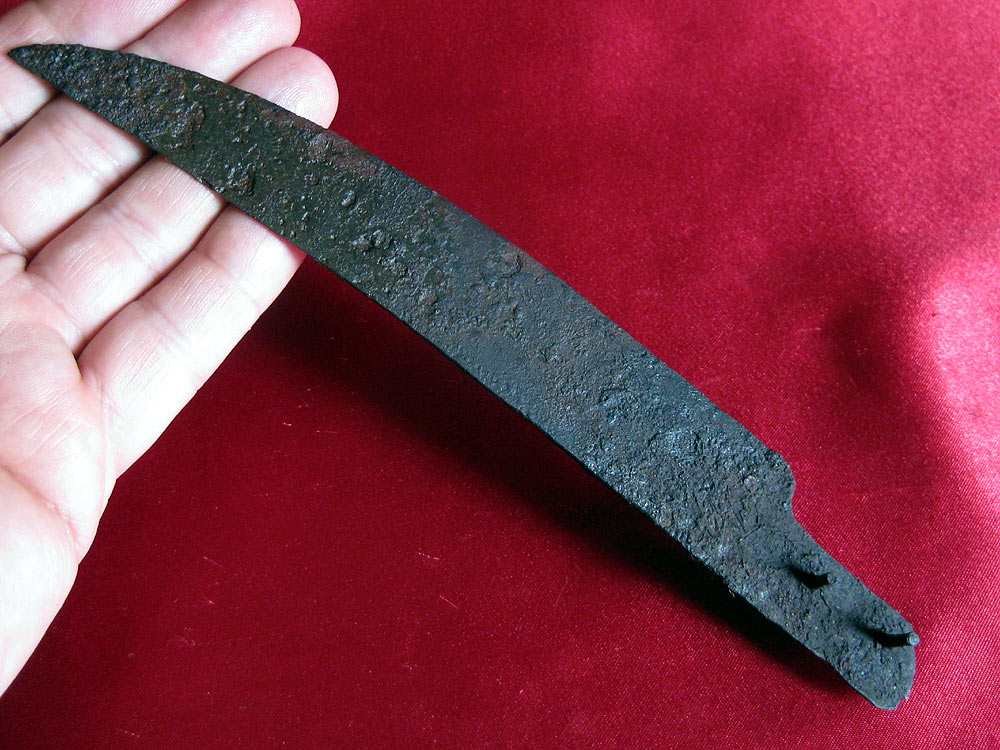
Knife i just picked up. Same sweet shape as the "stalking turkey" knife...me thinks I need a repro of it with a pistol grip handle...Like I need another knife


Wow so this summer is off to a bang. Weirdness abounds in the world and it’s an odd feeling trying to be used as a source of faux controversy. I guess it is a sign I must be doing something right and along with the new rush of hate mail I guess I’m really getting this blog thing down. The best thing about hate mail is the same misspellings in multiple emails…sometimes I wonder if the same weirdo has decided to let me know in various ways his hatred of my take on a weird subculture.

   One random tangent that has gone off in my skull lately has been camp set ups. I’ve been lucky to be fielding with two groups (The augusta county militia and the “Traders”) that really want to nail down “camp life” for a long time now. Whether a public event or our own little scout in the woods it seems that camp life is something that just has become second nature to each group. The lack of fire irons, cast iron Etc is pretty obvious.  It’s almost second nature to the guys I head into the woods with what to do when we stop to make camp.

     Everyone knows to “get to a task”   Starting a fire, gathering firewood, setting up the gun rack, clearing a sleeping area, Etc. A few times we’ve had a large group of newbies in the camp and it’s always very obvious that these guys have spent more time in the cut lawns and firewood piles of battlefields then living “on campaign”. It would have easy as a unit to laugh at the newbs while they sat shivering around a smoldering log  waiting for a kettle to boil but who would that have helped? They’d have spent a miserable night out, hated it and maybe never came out again. SO we jumped in showed them how to get a fire going in the rain, how to build a tripod and in the end everyone had a good time.

    So I’ve decided to focus the next few posts on camp life/craft.  Show folks documented alternatives to squirrel cookers, fire irons etc. And just how easy it is to be comfortable in camp/woods as well as just how easy it is to get out there and just do stuff.

    Setting up a camp is one of the standard tasks in the period that often gets lost to the background in period journals. Many times it’s simply relegated to the short entry “camped at…” much like my favorite period description “in the common fashion”. It leaves A LOT (like everything) out and up to speculation (and when reenactors speculate you’re just a short hop, skip and jump from a Roger’s rangers coat trimmed in bear fur)

    Now when most folks picture a hunters “camp” the Oft quoted Doddridge comes to mind:
“A hunting camp, or what was called a half-faced cabin, was of the following form: the back part of it was sometimes a large log; at the distance of eight or ten feet from this two stakes were set in the ground a few inches apart, and at a distance of eight or ten feet from these two more, to receive the ends of the poles for the sides of the camp. The whole slope of the roof was from the front to the back. The covering was made of slabs, skins or blankets, or, if in the spring of the year, the bark of hickory or ash trees. The front was left entirely open. The fire was built directly before this opening. The cracks of the logs were filled with moss. Dry leaves served as a bed.
A little more pains would have made a hunting camp a defense against the Indians. A cabin ten feet square, bullet proof and furnished with port holes, would have enabled two or three hunters to hold twenty Indians at bay for any length of time. But this precaution was never attended to; hence the hunters were often surprised and killed in their camps.”

    Not gonna lie…this camp sounds pretty awesome. When looking at descriptions of “hunters” this type of station camp would be what you were working out of. Many folks when going on a scout try and set up something like this (usually without the bark roof and oil cloth I its place).  However this type of set up has its limitations especially for those of us in the modern get back home Sunday night world. The important  part of the quote most folks overlook comes a few sentences before this:

 “Two or three horses furnished with pack saddles were loaded with flour, indian meal, blankets and everything else requisite for the use of the hunter”

  Horses! Bingo! This isn’t the camp set up by a guy or two with just the stuff they have on them it’s the camp of a man with access to heavy equipment.  Like I mentioned in a previous post market hunting/Long hunts were not the job of a single man alone in the wilderness, you needed some pretty expensive tools to make a go of it. However there is a simple solution to this…Just going to sleep on the ground. Ok hear me out before you call me a heretic or whatever.

    Daniel Trabue gives us a pretty easy way around the massive camp for the weekend:
“we would go some distance in serch of our horses. So we set out on foot, took some provisions with us. We hunted all day but could not find them. I suppose we went 15 or 20 miles eastward…We took up camp in the woods, was afraid to make fire, wropt our blankets around us, and went to sleep and slept very well.” Trabue  

   Ok so Trabue and the Dutchman keep it pretty simple. No fire, just blankets and ground. Kind of hard to screw up. From reading A LOT of period journals this seems to be without a doubt the most common, everyday way of sleeping in the woods (or on the march)  you’ll find. I know it sounds weird but so are the looks you get from people when you tell them you spent the weekend camping without a tent in the middle of nowhere.

 Like I mentioned hunters worked out of a base camp coming back to drop off hides, resupply etc. More often than not they probably spent a night like Trabue and the Dutchman.

 I can’t emphasize this enough. You, some food, your gear, a blanket and the ground is ALL you really need 99% of the time when going on a scout in the summer.  You start to add to the equation and your just making it way more complicated then you need to. Here is a challenge for you Just put on your normal gear as if you’re going hunting, walk off into the woods and sleep overnight. Do this once and you’ll start to really look at your method of packing for scouts differently.

 ****Ok now is a quasi-editorial that has little to do with the historical context of this post. I run into a lot of folks who want to “trek” but have never been on a “trek”. Stop overthinking it folks a scout is wayyyy easier to plan then going to an event.  Most folks live within a few hours of a few state/national forests, DO some online research/emails/phone calls about guidelines (instead of reading page 25 of message board weirdness, or post 2 million by a guy waxing philosophical  about how you’re never going to get it as correctly as he did back in 1987) of that park/forest   pick up some water purification tablets, try and convince a friend to go and just do it. Walking into the woods and sleeping overnight is not rocket science. You don’t need to pass a jury, squirrels don’t bring up politics and the trees won’t mention Facebook. It’s awesome!*****

    Alright I can already hear the self-doubt in some folks and the Bravado of others. In this weirdness people either fall into the “I’ve never camped before” Camp or the “I’m an expert woodsman” camp. Funny how that works…To put ones mind at ease as to the skills of the 18th century woodsman lets see what someone who saw them a lot thought of them.

“The Indians say, that when the white people encamp in the woods they are sure to lose something; that when they are gone, something or another is always found which they have lost, such as a knife, flints, bullets and sometimes even money. They Also observe that the whites are not so attentive as they are to choosing an open dry spot for their encampment; That they will at once set themselves down in any dirty and wet place, provided they are under large trees; that they never look about to see which way the wind blows, so as to be able to lay the wood for their fires in such a position that the smoke may not blow on them; neither do they look up the trees to see whether there are not dead limbs that may fall on them while they are asleep; that any wood will do for them to lay on their fires, whether it be dry or wet, and half rotten, so that they are involved during the whole night in a cloud of smoke; or take such wood as young green oak, walnut, cherry, chestnut, &c., which throws sparks out to a great distance, so that their blankets and clothes get holes burned in them, and sometimes their whole camp takes fire. They also remark that whites hang their kettles and pots over a fire just kindled, and before the great body of smoke has passed away.”  Heckwelder page 191

   So as you see it doesn’t look like everyone walking thru the ohio country swamps in the period walked out of special forces camp. Argh…It’s hot, too hot to be sitting here at a keyboard. SO I’m going to cut this short and revisit the topic in a day or two. But I have posted up a few nice images showing a simple camp set up. While they are images of native camps I don’t feel that a makeshift camp in the backcountry would look too different. SO next post I’m going to put up an interview with the folks at “Hot Dip TIN”  and cover some quick and easy camp tools that can make life easier.

 Oh and for Dave Barno and the rest of the folks getting ready for the Dunmore Stroll here is a version of the Dunmore camp song something that all Viriginia Militia should know. It also has the ACM shooting creedo in it (besides aim small Buck and ball!) “ Strive not to shoot often, But strive to shoot well” :
 Point Pleasant Camp song From Newell’s journal

Bold Virginias all, each cheer up your heart.
We will see the Shawnees before that we depart,
We will never desert, nor will we retreat,.
Until that our Victory be quite complete.

Ye offspring of Britain!  Come stain not your name.
Nor forfeit your right to your forefathers' fame,
If the Shawnees will fight, we never will fly,
We'll fight & we'll conquer or we will die.

Great Dunmore our General valiant & Bold
Excells the great Heroes - the Heroes of old;
When doth command we will always obey,
When he bids us fight, we sill not run away.

Good Lewis our Colonel, courageous and Brave,
We wish to command us - our wish let us have.
In camp he is pleasant, in War he is bold
Appeas like great Caesar - great Caesar of of old.

Our Colonels & Captains commands we'll obey,
If the Shawnees should run we will bid them to stay,
Our Arms, they are Rifles, our men Volunteers
We'll fight & we'll conquer you need have no fears.

Come Gentlemen all, come strive to excel,
Strive not to shoot often, but strive to shoot well.
Each man like a Hero can make the woods ring,
And extend the Dominion of George our Great Kink.

Then to it, let's go with might & with main,
Tho' some that set forward return not again;
Let us quite lay aside all cowardly fear
In hope of returning before the new year.

The land it is good, it is just to our mind,
Each will have his part if his Lordship be kind.
The Ohio once ours, we'll live at our ease,
With a Bottle & glass to drink when we please.

Here's a health to King George & Charlotte his mate
Wishing our Victory may soon be complete
And a kind female friend along by our Side
In riches & splendor till Death to abide.

Health to great Dunmore our general also,
Wishing he may conquer wherever he go.
Health to his Lady - may they long happy be
And a health, my good friends, to you & to me.

Tuesday, June 5, 2012

Robinson Crusoe had a giant Cartouche knife and Friday knew how to read...

 1752 image   Mocs and leggings with a coat and hat


"St. John's" Image   nice camp scene

18th cent. Image of Robinson Crusoe...leather/hide clothes, beard, giant knife thing and axe tucked in a belt....SO many jokes...Ya I'm gonna walk away from that one

 So I got a pretty good response from the last posting. No hate mail (yet) and that’s always encouraging. I figured I’d point people towards some “must have” books this post. My advice for new folks is that you should spend more money on Books then you do quillwork. Of course after a while the books become more expensive then quillwork (I need a $300 book right now…I know need is a strong word but I NEEEEDDDD this book….unless I can get it thru Interlibrary loan)
  
     Anyhow…Over the years some books I find myself going back to time and time again to double check info or just reread. I find that the more I reread some books info pops up that I totally overlooked the first time. For some reason “scouwa” the James Smith Narrative is one of these books. I first read the book in 1995 in high school and for me it’s been a constant go to book  when the ADD kicks in.
A few other books I really think are  worthwhile investment for folks:
“Observations on the American Backcountry” By Donald Rettig:  This a “bearing is noble and proud” type book for reenactors. Mr. Rettig breaks stuff down such as hunting shirts, breechclouts, drinking etc from period Narratives. It’s a great jumping off point for new folks as well as a quick go to for when you think you remember a quote from that book, by that guy, about that thing.
“Contact Points: American Frontiers from the Mohawk Valley to the Mississippi, 1750-1830” Andrew Clayton:  This book is a collection of essays on the Backcountry by a number of respected authors. Ok I know some authors out there in the “hobbie” blast any modern historians work as some kind of Liberal conspiracy to make the backcountry a socialist utopia (while somehow their books are above critique and agenda free)  This book is a great starting point to lead you to some killer books that will really open up your eyes/mind to looking at the backcountry in a new way.
“Chainbreaker's War: A Seneca Chief Remembers the America Revolution by Blacksnake”  If ya like reading Shane/Draper interviews you’ll love this book. It’s An Interview with Blacksnake a Seneca who fought in the Revolution. Some really kewl little tidbits about backcountry war parties and native life. Now if you Like reading Francis Parkman’s stuff you might not dig it (Am I the only person who can’t stand Parkman’s stuff? )
Any of DALE PAYNE’S BookS:  Ok I don’t get a kickback from Dale for pimping his books. He’s done a great Job of compiling Info and letting it speak for itself. You can get his books from a number of sutlers or contact Prickett’s Fort at info@prickettsfort.org (304)363-3030
“Westward into Kentucky: The Narrative of Daniel Trabue by Daniel Trabue”   Awesome narrative (looks like it was written by Alan Krause) some great info on how folks moved into Kentucky as well as 18th century backcountry life.

“Textiles in America 1650-1870: A Dictionary Based on Original Documents, Prints and Paintings, Commercial Records, American Merchants' Papers, Shopk (Winterthur/Barra Book) by Florence M. Montgomery”:  Ok once again some folks will blast the idea of anything but nettles for cloth but….This book will answer A ton of questions that might pop into your skull from reading narratives, ledgers etc. This is a must have for anyone reenacting the 18th century and want to improve their kit in anyway. You don’t need to count threads to enjoy this book.
 
 SO that’s just a few books I recommend to folks. I’ll be posting some more as the summer goes along. Also don’t don’t, don’t forget about google books. A LOT of period narratives are on their and readable for free. This way you can save yourself a lot of $ to buy more books, its part of the sickness that is this hobbie. I’m running out of shelf space myself…and the piles of books next to my weaving chair are often the flashpoint for family debates.

      To add to the weirdness I got a recent update from Mr. Crowder. He recently received a copy of the “crazy crow” Cartouche Knife. His review of the product was pretty short and sweet…Don’t buy it. In his words “it weighs as much as a trade gun”.  Crowder is a pretty good judge of the minutia that goes into a trade knife so if you’re looking for a good copy of this knife…looks like you’ll be spending more then $30.  If you’re in the market for a Knife I do know “At the Eastern Door” has some killer scalpers made by Eric Schatzel drop him an email for details.

   This brings up a question I’ve been asked a few times this past month. How do I choose stuff to review? Well Normally it’s just stuff I need for my kit and pick up from a vendor after doing research into the item myself. Doing a little pre buy research I then know what to ask the vendor/craftsperson as far as their product goes. 99% of people making a quality item can then fill in the blanks for you on the product.
        A few items I’ve reviewed were given to me by the maker to do some “field tests” on (The South Union Mills stockings and Jed Wray likes how I try and destroy his stuff) But honestly if I didn’t like the item I would simply send it back to the maker or pay for it and put it in the bin of stuff I don’t use. I really don’t want to give anyone a BAD review so I simply choose to not review items I don’t like. I will however reserve the right to complain about blanket pins, squirrel cookers, woven garters with leather tabs, coverlet haversacks and Items from BIG vendors (like the crazy crow cartouche knife) as these vendors cover such a large cross section of hobbies me saying a knife isn’t quality really won’t hurt them at all.
     To add some eye candy I’ve posted two details of images I came across in a late night Coca cola fueled web search (ya I’m back on the soda…got its hooks into me again) One is a detail from a 1752 German image from an early Narrative showing a European man in a coat, hat and leggings and mocs.  The narrative can be found here (Thanx Joeseph): http://books.google.com/books?id=OGdCAAAAcAAJ&dq=Aventures+du+s.+C.+Le+Beau%2C+avocat+en+Parlement%2C+ou+Voyage+curieux+et+nouveau+parmi+les+Sauvages+de+l%E2%80%99Amerique+septentrionale+dans+lequel+on+trouvera+une+description+du+Canada+avec+une+relation+tr%C3%A8s+particuli%C3%A8re+des+anciennes+coutumes%2C+m%C5%93urs+et+fa%C3%A7ons+de+vivre+des+barbares+qui+l%E2%80%99habitent+et+de+la+mani%C3%A8re+dont+ils+se+comportent+aujourd%E2%80%99huy.&source=gbs_navlinks_s
   
   The second image is a detail from a painting entitled “a view of St. Johns…” and was done in the 1780’s. Nice detail of some natives hanging around a fire as well as some guys sleeping under a canoe. The whole image is pretty sweet Canadians, guys in canoes. It can be seen here: http://jcb.lunaimaging.com/luna/servlet/detail/JCB~1~1~1638~2570001:A-View-of-St--John-s,-upon-the-Rive?sort=IMAGE_DATE%2Csubject_groups&qvq=w4s%3A%2Fwhat%2FArtifacts&fb_source=message

   Well summer vacation has begun so let’s see if having Jr. Gingi wrangler home helps me get more stuff finished.